Can You Get a Concussion Without Hitting Your Head?
You were in a car accident. Your head never hit the dashboard or window. You walked away thinking you were fine. But most people do not realize that direct head impact is not required for a concussion to occur. The brain can be injured simply by rapid, forceful movement inside the skull.
Symptoms often do not appear right away. They may show up hours or even days later, making the injury easy to overlook. Fortunately, MRI and DTI scans help recognize subtle brain changes that explain lingering symptoms after trauma or sudden movement.
In this blog, you will learn how concussions happen without head impact, what symptoms to watch for, and when advanced imaging is the right next step.
Can a Concussion Really Happen Without Hitting Your Head?
Yes, absolutely. A concussion without hitting your head is medically recognized and more common than most people think. When the body experiences sudden acceleration or deceleration, the brain moves inside the skull. This movement stretches and disrupts nerve fibers, causing a concussion even without any direct blow to the head.
Whiplash from a rear-end car accident is one of the most common causes. Sports collisions involving body hits, sudden falls, and high-speed motion events can also trigger this type of injury. The skull protects the brain from outside impact. However, it cannot stop the brain from shifting internally when the body is jolted with enough force.
How Concussions Happen Without Direct Head Impact
The brain is more vulnerable than most people realize. You do not need to hit your head for serious neurological damage to occur. Here are some of the most common situations where this type of brain injury can occur:
Whiplash During a Car Accident
Rear-end collisions cause the head to snap forward and backward rapidly. This violent motion forces the brain to shift inside the skull. Even at low speeds, this movement can disrupt nerve pathways and cause a concussion. Many car accident patients never feel a direct head impact yet develop real and lasting neurological symptoms in the days that follow.
Sudden Falls or Slips
A hard fall does not always mean the head hits the ground. The sudden jolt of impact traveling through the body can be enough to shake the brain. Falls on stairs, wet floors, or uneven surfaces create rapid deceleration that puts the brain at risk. This is especially common in older adults and athletes whose injuries are sometimes dismissed without thorough evaluation.
Sports Collisions and Body Hits
A hard tackle, body check, or collision in contact sports can jar the brain without any helmet-to-helmet contact. The force transfers through the neck and spine directly to the brain. Football, soccer, hockey, and rugby players are particularly at risk. Many of these injuries go unrecognized because players feel no immediate head pain and continue playing without seeking evaluation.
Roller Coasters or Sudden Violent Motion
Extreme acceleration and deceleration, such as that experienced on high-speed rides or during an explosion-related blast wave, can also cause concussion. The brain is essentially thrown against the inside of the skull repeatedly. This type of injury is well documented in military personnel and in rare cases involving amusement ride incidents. The absence of any head contact does not reduce the seriousness of these injuries.
Common Symptoms to Watch for After an Accident
Symptoms are not always immediate. Some people feel normal at first before problems gradually develop. Do not brush off how you feel in the days following any sudden impact or motion event. Watch closely for these warning signs:
- Persistent headaches that return or worsen over time
- Dizziness or balance problems that affect daily movement
- Nausea that has no other clear cause
- Memory issues or difficulty recalling recent events
- Difficulty concentrating on tasks at work or home
- Sensitivity to light or noise that was not present before
- Mood changes, irritability, or increased emotional reactions
- Fatigue that does not improve with rest or sleep
- Blurred vision or difficulty focusing on objects clearly
Why Some Concussion Symptoms Show Up Later
Many people feel completely fine immediately after an accident. This can create a dangerous false sense of security. One reason is adrenaline. After any traumatic event, the body releases adrenaline that temporarily masks pain and discomfort. This can make even a significant brain injury feel invisible in the first few hours.
Brain inflammation also builds gradually. Swelling and chemical changes inside the brain take time to develop after injury. As a result, symptoms like headaches, confusion, and fatigue may only surface 24 to 72 hours after the initial event.
Furthermore, many people return to normal activities too quickly. Without rest and proper monitoring, the brain does not get the recovery time it needs. This can make symptoms worse and extend the overall recovery period significantly.
When Should You Get an MRI After a Possible Concussion?
Not every concussion requires advanced imaging immediately, but persistent or worsening symptoms should never be ignored. Doctors may recommend MRI or advanced neuroimaging in situations like these:
Symptoms Last Longer Than Expected
Most mild concussion symptoms begin to improve within a week. However, if your headaches, fatigue, or cognitive issues continue well beyond that window, imaging becomes important. Persistent symptoms suggest that the brain has not recovered normally and a deeper evaluation is needed to understand why and guide appropriate treatment.
Severe Headaches or Cognitive Changes
A headache that worsens instead of improving is a red flag. Significant memory loss, confusion, or difficulty forming clear thoughts are also serious warning signs. These symptoms suggest more than a mild injury. Imaging at this stage helps doctors determine whether structural damage or disrupted nerve pathways are contributing to what the patient is experiencing.
Ongoing Dizziness or Vision Problems
Dizziness and vision disturbances that do not resolve within a few days indicate ongoing neurological disruption. These symptoms often point to damage in the brain regions responsible for balance and sensory processing. MRI can evaluate these areas in detail and determine whether further advanced imaging like DTI is needed to locate the source of the problem.
Normal Initial Tests but Continued Symptoms
A normal CT scan or standard MRI does not always mean the brain is unaffected. Microscopic nerve damage is not visible on conventional imaging. If your initial tests came back clear but you continue to experience symptoms, advanced imaging should be the next conversation with your doctor. There may be more happening beneath the surface than standard scans can detect.
How Advanced MRI and DTI Scans Help Detect Brain Injuries
Standard MRI is a valuable diagnostic tool. However, it does have limits when it comes to detecting the subtle injuries that concussions cause. Conventional MRI is designed to show structural abnormalities like tumors, bleeding, or large lesions. It cannot always detect microscopic damage to nerve fibers caused by rapid brain movement.
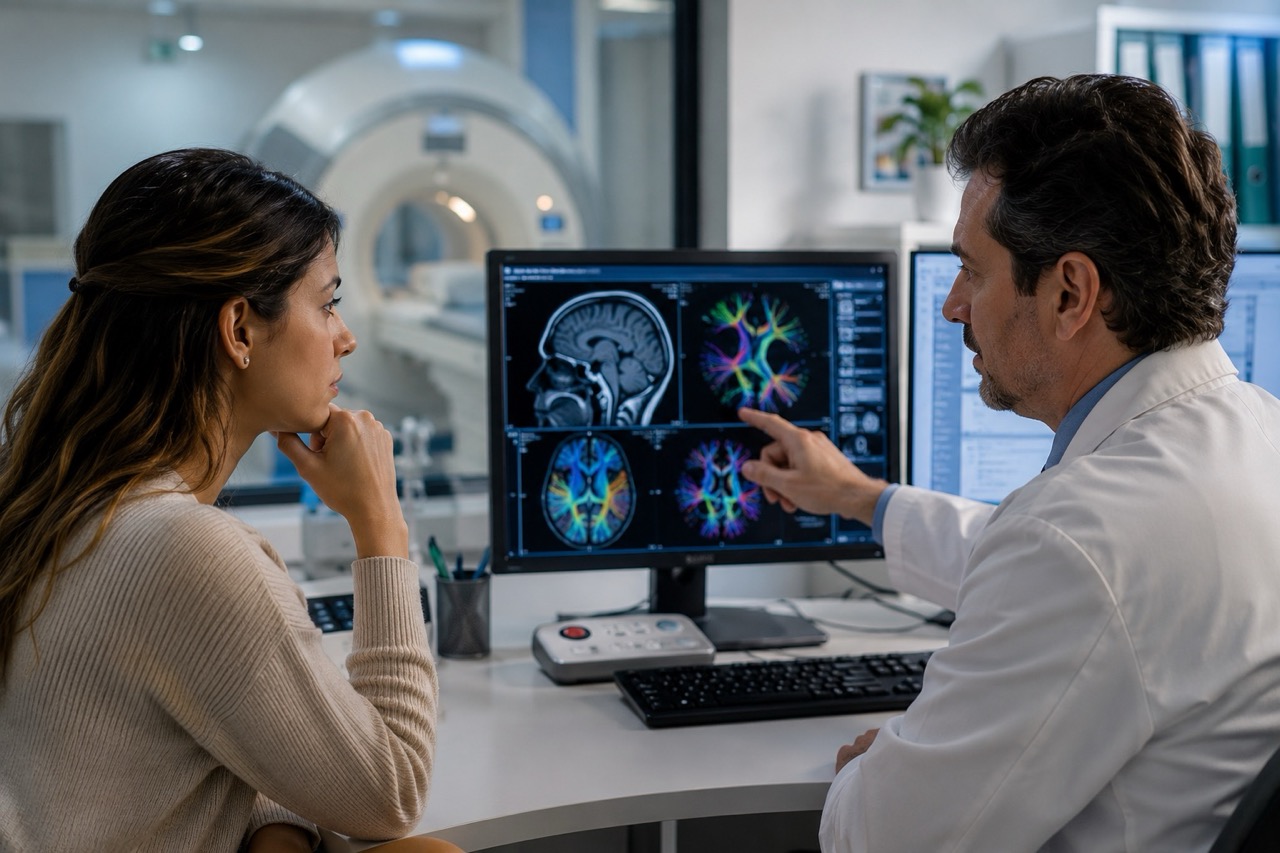
This is where DTI brain scans make a significant difference. Diffusion Tensor Imaging maps the white matter pathways inside the brain and measures how well nerve fibers are connected and functioning. When these connections are disrupted, DTI can detect it even when standard imaging appears completely normal.
For patients with concussion without hitting head, DTI can reveal the hidden damage that explains ongoing symptoms. Precision MRI Group’s Cypress Creek location has recently upgraded its MRI machine to offer DTI scanning, bringing this advanced neuroimaging capability to patients across South Florida.
Where to Get Advanced Brain Imaging in South Florida
Precision MRI Group provides advanced brain imaging across multiple locations in South Florida, with a focus on patient comfort and fast, accurate results. Our Cypress Creek location now offers DTI brain scans following a recent upgrade to our MRI equipment. This means patients dealing with concussion, whiplash, or unexplained neurological symptoms have access to the most detailed imaging available in the region.
We offer same-day appointments so you do not have to wait when symptoms are a concern. Reports are ready within 24 to 48 hours. Late evening and weekend scheduling is available to fit around your life. Free transportation is provided on request. Our multilingual team speaks English, Spanish, and Creole to make every patient feel supported and clearly understood throughout their visit.
When to Seek Medical Attention After a Possible Concussion
Do not wait and hope your symptoms disappear on their own. Early evaluation leads to better outcomes. Even mild symptoms deserve attention after any trauma involving sudden movement. A concussion without hitting your head is still a real brain injury. It requires the same care and monitoring as any other head trauma.
Moreover, symptoms that seem minor at first can worsen if the brain does not receive proper rest and treatment. The sooner you get evaluated, the sooner you can start recovering with the right support in place. Trust your body. If something feels off after an accident or sudden motion event, speak to a medical professional and ask about advanced imaging options.
Your Symptoms Are Real. Your Answers Are Here.
A concussion without hitting your head is possible, recognized, and deserves proper medical attention. If you have experienced whiplash, a fall, or any sudden forceful movement and something still does not feel right, do not ignore it.
Advanced MRI and DTI scans can reveal what standard imaging misses. They give you and your doctor the clarity needed to move forward with confidence. Schedule your brain scan at Precision MRI Group today and take the first step toward real answers and real recovery.
Precision MRI Group Locations:
Cypress Creek (DTI Available)
2122 NW 62nd Street, Suite 107, Ft. Lauderdale, FL 33309
Phone: (954) 677-1069, Contact: Latoya Reid (latoya@cypresscreekmri.com)
Additional Locations:
Pembroke Pines
9696 Pines Blvd., Pembroke Pines, FL 33024
Phone: (954) 391-7844, Contact: Amalia (amalia@pinesimagingcenter.com)
Lake Worth
2311 10th Ave N Suite #2 and Suite #1, Lake Worth, FL 33461
Phone: (561) 623-8346, Contact: Marisol (marisol@mriprecision.com)
Port St Lucie
879 E Prima Vista Blvd #2, Port St. Lucie, FL 34952
Phone: (772) 344-7566, Contact: Laura Schwenzer (laura@mriprecision.com)