Why MRI Shows Nothing but Your Pain Continues
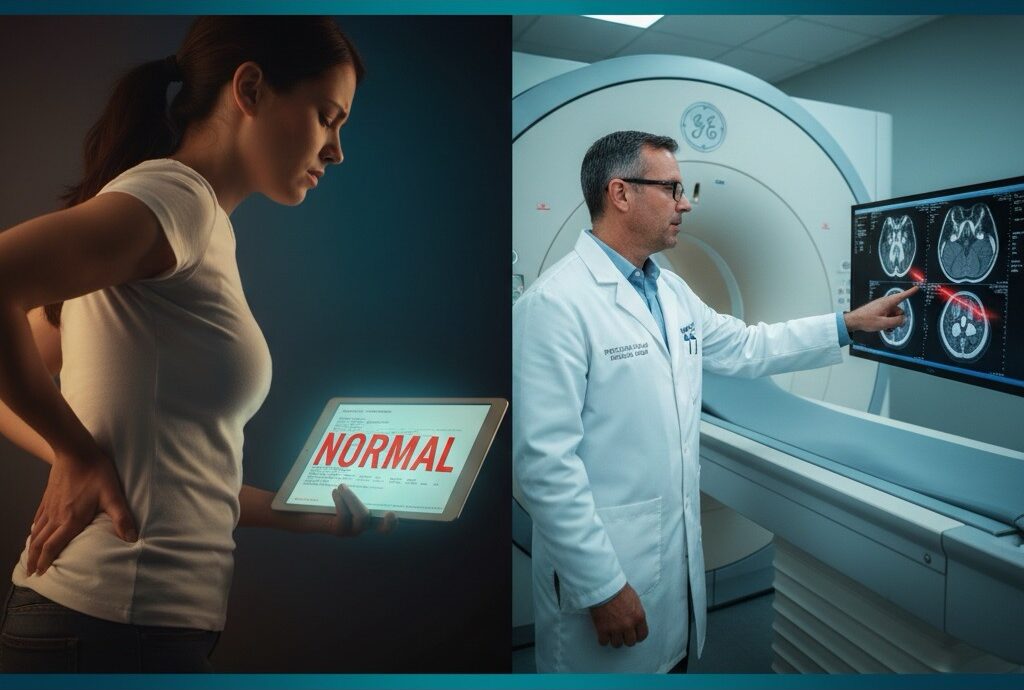
You underwent an MRI expecting answers about your chronic pain, but the results came back normal. Your doctor tells you the MRI shows nothing, yet you still feel significant discomfort daily. This frustrating situation affects many patients who know something is wrong despite negative imaging results.
When MRI shows nothing but pain persists, it doesn’t mean your symptoms are imaginary or unimportant. MRI technology has limitations and cannot detect every source of pain or tissue damage. Furthermore, some conditions develop slowly and appear on imaging only after significant time passes.
At Precision MRI Group, our advanced imaging technology and experienced board-certified radiologists identify subtle abnormalities. We understand that persistent pain after MRI requires thorough evaluation and sometimes different imaging approaches. Our facilities throughout Florida offer same-day appointments and expert interpretation when you need answers. Additionally, MRI normal but pain continues situations warrant careful review by specialists who understand imaging nuances.
Why Would an MRI Show Nothing Even When Pain Is Real?
MRI shows nothing in many cases because certain injuries and conditions don’t appear clearly on scans. Micro-tears in muscles or tendons can be too small for standard MRI sequences to detect. Early-stage inflammation hasn’t caused enough tissue changes to show up on imaging yet.
Nerve irritation creates real pain without visible structural damage on MRI scans typically. Functional issues like muscle spasms or joint instability don’t always produce changes visible on imaging. Pain from surrounding structures may radiate to areas that look normal on targeted scans.
Soft tissue pain diagnosis sometimes requires repeat imaging with different sequences or contrast enhancement. Precision MRI Group’s advanced GE HiField 1.5 Tesla scanners provide exceptional detail for subtle findings. Our short-bore design ensures patient comfort during longer, more detailed scanning protocols when needed.
Common Causes of Pain That Do Not Always Appear on MRI
Many pain-causing conditions remain invisible or unclear on standard MRI imaging protocols routinely. Understanding these limitations helps explain why MRI shows nothing despite your significant symptoms and discomfort. Here are conditions that rarely appear clearly even when symptoms are severe:
- Nerve inflammation – Irritated nerves cause burning or shooting pain without visible swelling on scans.
- Facet joint pain – Small spinal joints create back pain that doesn’t show structural changes initially.
- Myofascial trigger points – Muscle knots cause referred pain patterns invisible on standard imaging sequences.
- Early arthritis – Initial cartilage breakdown occurs before bone changes appear on MRI scans clearly.
- Small ligament or tendon injuries – Minor sprains and micro-tears don’t create enough signal change.
- Referred pain from spine or hips – Pain felt in one area originates elsewhere with normal imaging.
- Muscle imbalance or strain – Functional problems don’t show structural abnormalities on standard scans typically.
When MRI Shows Nothing but Pain Continues, What Should You Do Next?
Persistent pain after MRI with normal results requires a systematic approach to find answers. Don’t accept that nothing is wrong when your symptoms significantly impact daily life and activities. Follow these steps when MRI shows nothing but symptoms persist:
- Follow up with referring provider – Discuss your ongoing symptoms and review imaging results together thoroughly.
- Consider physical therapy – Many pain conditions improve with targeted exercises and manual therapy techniques.
- Request a targeted MRI of a different region – Pain may originate from adjacent areas not included.
- Evaluate for nerve issues – Nerve conduction studies or EMG testing detect electrical problems MRI misses.
- Consider contrast MRI – Enhanced imaging reveals inflammation and vascular changes invisible on standard scans.
Precision MRI Group offers fast scheduling for follow-up or alternative imaging when initial scans are inconclusive. Our 24 to 48-hour results ensure your doctor receives information quickly for treatment decisions.
Should You Get a Repeat MRI If Symptoms Change?
Repeat imaging becomes appropriate when your condition evolves or worsens over time significantly. Initial scans may miss problems that develop or become visible only after inflammation increases. MRI shows nothing initially but later reveals injuries as healing processes create visible changes.
Worsening pain despite conservative treatment suggests something was missed or has progressed since initial imaging. New numbness or weakness indicates nerve compression that may now appear on repeat scans. Increased mobility issues or joint instability warrant re-evaluation with updated imaging for accurate diagnosis.
Post-injury swelling can obscure early findings that become clear once inflammation resolves partially. Different scan types like cervical, thoracic, lumbar, knee, and hip MRI target specific regions. Furthermore, MRI follow up scan with specialized sequences may reveal previously invisible abnormalities causing symptoms.
When MRI Shows Nothing but Pain Feels Worse
Hidden conditions develop gradually and don’t appear on early imaging studies despite real symptoms. Stress fractures often don’t show up until healing begins and bone changes become visible. Bone bruises from impact trauma take time to develop signal changes MRI can detect.
Soft tissue swelling missed in early scans becomes more apparent as inflammation progresses over days. Delayed inflammatory response means initial MRI looks normal before tissue changes appear on imaging. Some injuries need weeks before MRI abnormalities match the severity of symptoms patients experience.
Advanced imaging techniques or contrast studies may help detect subtle injuries standard scans miss. Nerve pain MRI requires specific sequences focused on neural structures and surrounding inflammation. Furthermore, hidden injuries MRI doesn’t show initially often appear on follow-up scans after appropriate time.
How Precision MRI Group Helps When MRI Shows Nothing but Pain Persists
When MRI shows nothing but pain continues, expert review and advanced imaging make the difference. Our board-certified radiologists specialize in identifying subtle findings other facilities might overlook or dismiss. We understand that persistent symptoms deserve thorough evaluation with appropriate imaging protocols always.
Multiple Florida locations in Pembroke Pines, Lake Worth, Cypress Creek, and Port St. Lucie provide convenient access. Same-day and weekend appointments accommodate urgent evaluation needs when symptoms worsen or change significantly. Multilingual staff speaking English, Spanish, and Creole ensures clear communication with all patients consistently.
Short-bore MRI scanners reduce anxiety during longer, more detailed imaging protocols requiring extended scanning. Online script upload simplifies scheduling without phone calls or complicated paperwork processes for convenience. Expert radiologist reviews include consultation with referring physicians when findings need clarification or additional sequences.
Pain evaluation MRI Florida services include specialized protocols for challenging diagnostic cases requiring expertise. Advanced MRI imaging Pembroke Pines and other locations uses the latest technology for subtle findings. Follow up MRI scan appointments help track changes over time and detect developing conditions early.
Signs You Should Seek Urgent Medical Evaluation
Some symptoms require immediate medical attention regardless of what imaging shows or doesn’t show. These red flags indicate potentially serious conditions needing emergency evaluation and treatment without delay. Seek immediate medical care if you experience these warning signs:
- Loss of bowel or bladder control – Indicates possible spinal cord compression requiring emergency intervention immediately.
- Severe weakness – Progressive muscle weakness suggests nerve damage needing urgent evaluation and treatment.
- Inability to walk – Sudden mobility loss warrants immediate emergency department evaluation for serious conditions.
- Sudden numbness – New or worsening numbness, especially both sides, indicates possible spinal problems.
- Trauma history – Recent injury with severe pain needs evaluation even when initial MRI shows nothing.
Remember that MRI is a diagnostic tool, but your symptoms guide treatment decisions ultimately. MRI limitations mean normal imaging doesn’t rule out serious conditions requiring medical attention and care.
Book Your Follow Up MRI With Precision MRI Group
When MRI shows nothing but symptoms persist, specialized imaging at Precision MRI Group provides answers. Upload your doctor’s script online for fast, convenient scheduling at your preferred location. Confirm insurance coverage or discuss self-pay pricing for transparent, affordable options always.
Choose the appointment time that fits your schedule, including late evenings and weekends for flexibility. Receive fast results within 24 to 48 hours for quick treatment planning and decisions.
Call or schedule online for fast, accurate MRI imaging across South Florida today.
Precision MRI Group Locations:
Pembroke Pines
9696 Pines Blvd., Pembroke Pines, FL 33024
Phone: (954) 391-7844, Contact: Amalia (amalia@pinesimagingcenter.com)
Lake Worth
2311 10th Ave N Suite #2 and Suite #1, Lake Worth, FL 33461
Phone: (561) 623-8346, Contact: Marisol (marisol@mriprecision.com)
Cypress Creek
2122 NW 62nd Street, Suite 107, Ft. Lauderdale, FL 33309
Phone: (954) 677-1069, Contact: Latoya Reid (latoya@cypresscreekmri.com)
Port St Lucie
879 E Prima Vista Blvd #2, Port St. Lucie, FL 34952
Phone: (772) 344-7566, Contact: Laura Schwenzer (laura@mriprecision.com)